Supporting Children with Down Syndrome: Practical Strategies at Home and School
Down syndrome affects a child’s development across areas such as movement, communication, and daily living skills. With the right support, children can build independence, confidence, and meaningful participation in everyday life.
Building Skills Through Daily Activities at Home
Daily routines at home provide valuable opportunities for learning and development. Simple activities such as getting dressed, brushing teeth, or helping with small household tasks can support independence over time.
Creating consistent routines helps children understand what to expect and reduces uncertainty. Visual supports, such as picture charts or step-by-step prompts, can guide children through tasks and make activities more manageable. With regular practice and encouragement, these everyday moments can build confidence and strengthen family involvement.
Supporting Participation in the School Environment
At school, children benefit from structured and inclusive learning environments. Adjustments such as visual instructions, movement breaks, and supportive classroom setups can help improve focus and participation.
Collaboration between families, teachers, and allied health professionals plays an important role. Working together ensures that strategies used at home are reinforced at school, creating consistency and supporting the child’s overall development.
Encouraging Learning Through Play and Interaction
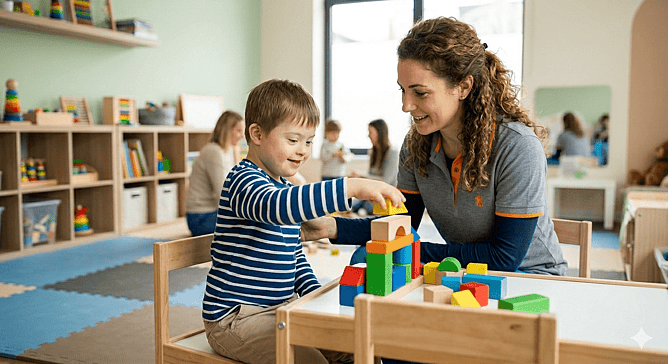
Play is an important part of development. Through play, children can build communication skills, social interaction, and problem-solving abilities. Activities that involve sharing, taking turns, and working together can support social confidence.
Group play and structured activities provide opportunities for children to engage with others in a supportive environment, helping them build relationships and develop important life skills.
A Supportive and Flexible Approach
Every child develops at their own pace, so it is important to take a flexible and patient approach. Some days may be more challenging than others, and adjusting activities or expectations can help reduce frustration.
Celebrating small achievements and focusing on progress helps build confidence and encourages continued learning.
How Holistic Strength Can Support You
At Holistic Strength in Perth, Western Australia, we support children with Down syndrome through personalised, evidence-based allied health services. Our Occupational Therapists focuses on building independence, improving movement and coordination, and supporting participation in everyday activities at home and school.
We work closely with families to create practical, goal-focused strategies that support each child’s development.