Wrist and hand injuries can affect many aspects of daily life, making everyday tasks such as writing, cooking, dressing, or carrying objects more difficult. While recovery can take time, the right rehabilitation strategies and support can help improve function, reduce discomfort, and promote independence.
Understanding the Impact on Daily Activities
Our hands play a vital role in almost everything we do. When an injury affects strength, movement, or coordination, even simple tasks can become frustrating.
It's common for individuals to experience challenges with:
Gripping and lifting objects
Writing or typing
Preparing meals
Personal care tasks such as dressing or grooming
Work, study, or recreational activities
Recognising these challenges is the first step toward finding practical solutions and appropriate support.
The Role of Rehabilitation
Rehabilitation is an important part of recovery following a wrist or hand injury. Allied health professionals may recommend exercises designed to improve strength, flexibility, and range of motion while supporting the healing process.
A structured rehabilitation program can help individuals gradually return to everyday activities while reducing the risk of further injury.
Using Practical Tools and Adaptations
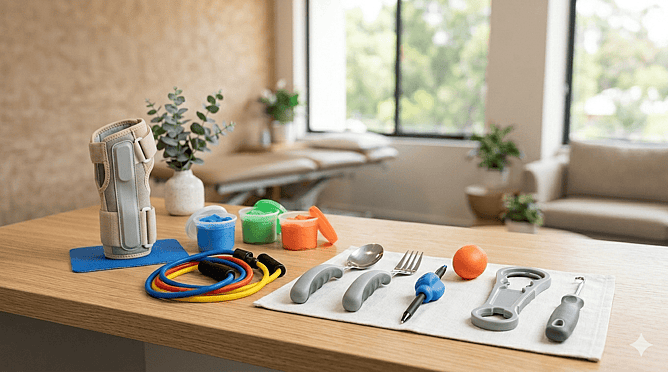
Small adjustments can make daily tasks easier during recovery. Adaptive equipment and assistive devices may help reduce strain on injured joints and muscles while maintaining independence.
Examples may include:
Ergonomic kitchen utensils
Adaptive grips for pens and tools
Jar openers and assistive household devices
Modified workstations for typing and computer use
These supports can help individuals continue participating in meaningful activities while healing.
Creating a Supportive Environment
A supportive home or workplace environment can make a significant difference during recovery. Organising frequently used items within easy reach and reducing activities that place unnecessary strain on the wrist or hand can help support healing.
Family members, friends, and caregivers can also provide practical support and encouragement throughout the rehabilitation process.
Focusing on Progress, Not Perfection
Recovery often happens gradually. Setting realistic goals and celebrating small improvements can help maintain motivation and confidence.
Whether it's returning to a favourite hobby, carrying groceries more comfortably, or completing daily tasks with less difficulty, every milestone represents progress.
Looking After Your Overall Wellbeing
Managing a wrist or hand injury involves more than physical recovery. Adequate rest, good nutrition, hydration, and stress management can all support the healing process.
Taking care of both physical and emotional wellbeing can help individuals feel more confident and in control throughout their recovery journey.
How Holistic Strength Can Support You
At Holistic Strength in Perth, Western Australia, our allied health team supports individuals recovering from injuries through personalised, evidence-based rehabilitation programs. We focus on improving strength, mobility, function, and confidence to help people return to everyday activities as safely as possible.
Whether you're recovering from a recent injury or managing ongoing limitations, our team can help you work towards your goals with a tailored rehabilitation plan.