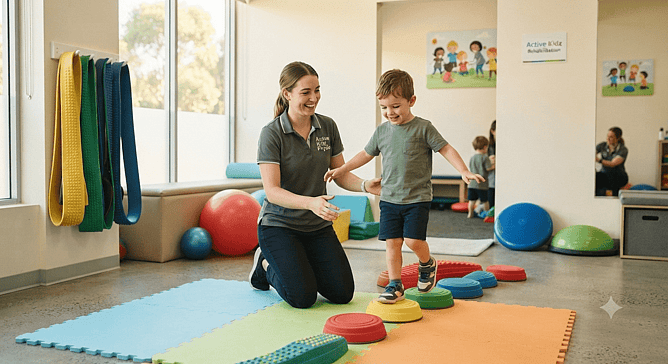
Cerebral palsy affects movement, muscle control, posture, and coordination, making everyday activities more challenging for many children. While every child has unique strengths and goals, exercise-based therapy can play an important role in supporting physical development, independence, and participation in daily life.
How Exercise Physiology Can Help
Exercise Physiology uses evidence-based exercise to improve physical function, strength, and mobility. For children with cerebral palsy, personalised exercise programs are designed around their individual abilities, goals, and stage of development.
Exercise may help improve:
Muscle strength
Balance and coordination
Joint mobility and flexibility
Walking and movement skills
Confidence in everyday activities
Programs are carefully progressed to ensure they are both safe and engaging, helping children enjoy being active while building lifelong healthy habits.
Supporting Movement Through Allied Health
Exercise Physiology often works alongside physiotherapy and other allied health services to provide a comprehensive approach to care. Together, these services focus on improving movement, developing functional skills, and encouraging participation at home, school, and in the community.
Activities are tailored to each child and may include stretching, balance exercises, strength training, and functional movement practice that supports everyday tasks.
Building Strength and Physical Confidence
Strength is an important part of improving movement and reducing physical limitations. Appropriate resistance exercises, bodyweight activities, and play-based movement can help children develop stronger muscles while improving posture and stability.
As strength improves, many children find it easier to participate in daily activities, recreational sports, and school-based physical activities.
Supporting Emotional Wellbeing Through Movement
Physical activity offers benefits beyond physical development. Regular exercise can improve mood, encourage social participation, and help children build confidence in their abilities.
Participating in group activities, community programs, or family-based exercise can also create opportunities to develop friendships and enjoy movement in a supportive environment.
The Importance of Family Involvement
Parents and caregivers play a valuable role in helping children achieve their goals. Encouraging regular movement, celebrating progress, and incorporating physical activity into everyday routines can reinforce the skills developed during therapy.
Working together with allied health professionals helps ensure that exercise programs remain meaningful, achievable, and enjoyable for each child.
Book an Exercise Physiology appointment at one of our convenient Perth locations:
Our Exercise Physiologists work closely with children, families, and allied health professionals to create personalised programs that support your child's goals and help them build strength, confidence, and independence.