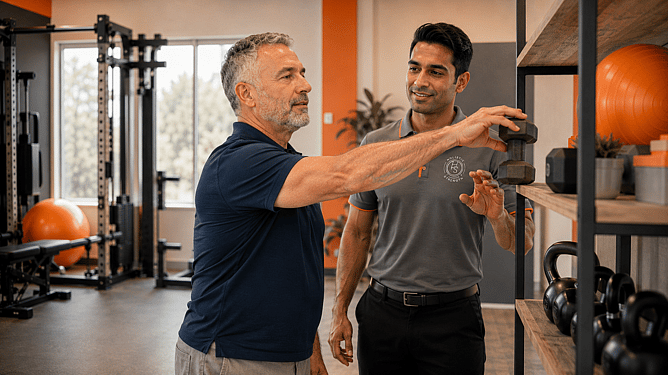
Recovering from a rotator cuff or shoulder injury can be challenging, particularly when pain and limited movement begin to affect everyday activities. With the right rehabilitation plan, appropriate exercises and support, you can gradually work towards improving your movement, strength and confidence.
Start with Gentle Movement
Depending on your injury and stage of recovery, gentle range-of-motion exercises may help reduce stiffness and maintain shoulder movement. Simple movements, such as pendulum exercises and controlled arm movements, may be included as part of a rehabilitation program.
As your shoulder improves, exercises can gradually progress to help rebuild strength and flexibility. It is important to increase activity at a pace that is appropriate for your injury rather than pushing through pain or doing too much too soon.
Build Strength and Stability
Strengthening the muscles around the shoulder can play an important role in rehabilitation. These muscles help support the shoulder joint and contribute to everyday movements such as reaching, lifting and carrying.
A tailored rehabilitation program can focus on gradually improving strength, mobility and stability based on your individual needs and goals. Working with an allied health professional can also help you understand which exercises are suitable for your stage of recovery and how to perform them safely.
Make Everyday Activities More Manageable
A shoulder injury can make everyday tasks such as cooking, cleaning, dressing and reaching for items more difficult. Making small adjustments to your routine can help reduce unnecessary strain while your shoulder recovers.
For example, keeping frequently used items within easy reach, avoiding heavy lifting and using tools with comfortable grips may make certain activities easier. Planning your day around your current abilities can also help you stay active without placing excessive demands on your shoulder.
Listen to Your Body
Recovery does not always happen in a straight line. Some days may feel easier than others, so paying attention to how your shoulder responds to movement and exercise is important.
If an activity causes significant or worsening pain, stop and speak with your treating health professional. Your rehabilitation program may need to be adjusted as your strength, movement and tolerance change.
Take Recovery One Step at a Time
Recovering from a shoulder injury takes time, and everyone's experience is different. Setting small, achievable goals can help you recognise progress, even when improvements seem gradual.
Whether you're returning to work, getting back to exercise or simply wanting to manage everyday activities more comfortably, the right support can make the rehabilitation process more manageable.
If you're looking for rehabilitation in Perth, a personalised approach can help you work towards your goals while building strength, movement and confidence along the way.