Recovering from an injury can be a gradual process. Once you begin feeling better, it can be tempting to return to your usual activities straight away. However, giving your body time to rebuild strength, movement and confidence can help you return to activity more safely.
Whether you're returning to exercise, work, sport or everyday activities, taking a gradual approach can help you understand what your body is ready for.
Return to Activity Gradually
Feeling better does not always mean your body is ready for everything you were doing before your injury. Increasing activity too quickly can place additional demands on areas that are still recovering.
Instead, consider gradually building up your activity based on your current abilities and the advice of your healthcare team. This might mean starting with shorter sessions, lighter activities or more frequent rest breaks before progressing.
Pay attention to how your body responds during and after activity. If you experience new or worsening pain, swelling or other concerns, speak with your healthcare professional before continuing.
Prepare Your Body for Exercise
A suitable warm-up can help prepare your body for physical activity. Depending on the activity and your individual needs, this may include gentle movements, mobility exercises or gradually increasing the intensity of your activity.
Similarly, allowing time to gradually wind down after exercise can help you transition back to your usual activities.
Your rehabilitation program may also include a combination of strength, mobility, balance and functional exercises. The right combination will depend on your injury, goals and stage of recovery.
Keep Checking In
Recovery does not necessarily end when you return to your usual activities. Ongoing check-ins with an appropriate healthcare professional can help you monitor your progress and identify areas where you may need additional support.
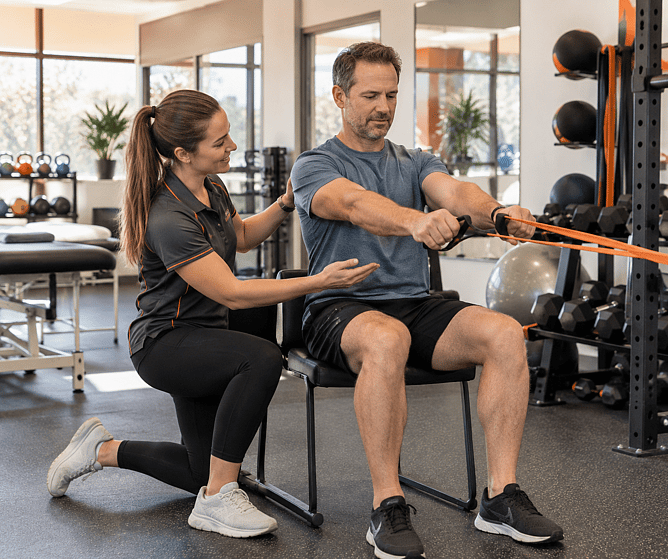
An Exercise Physiologist or Physiotherapist can work with you to develop an exercise program that considers your current abilities and goals. They can also help you understand how to progress your activities appropriately.
Give Your Body Time to Recover
Rest is an important part of managing your activity levels. Balancing exercise with adequate recovery time can help you avoid doing too much too soon.
Good nutrition and hydration also support your overall health and wellbeing. Eating a varied, balanced diet and drinking enough water can help you maintain your energy levels as you gradually return to your usual routine.
Set Realistic Goals
Returning to activity is not always a straight line. Setting small, achievable goals can help you stay motivated without feeling pressured to reach your previous level immediately.
You might start by aiming to walk a little further, complete an everyday task more comfortably or gradually return to an activity you enjoy. Recognising these smaller milestones can help build confidence along the way.
Supporting Your Long-Term Recovery
Preventing re-injury is not about avoiding activity. It's about understanding your body, progressing at an appropriate pace and knowing when to seek support.
If you're returning to activity after an injury and would like guidance, Holistic Strength's Exercise Physiologists and Physiotherapists can work with you to develop an approach suited to your needs and goals.
With patience, appropriate support and a gradual return to activity, you can continue building confidence in what your body can do.