Living with disability can affect many areas of everyday life, from movement and physical activity to communication and independence. Allied health professionals can provide practical support to help people work towards their individual goals and participate in the activities that are important to them.
Allied health is not a one-size-fits-all approach. The type of support someone receives will depend on their abilities, needs, goals and circumstances.
Supporting Movement and Physical Function
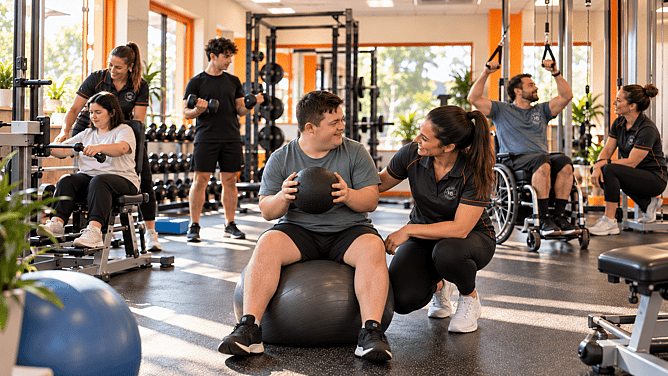
Physiotherapists and Exercise Physiologists can support people living with disability to develop and maintain physical abilities.
Depending on a person's needs and goals, rehabilitation may focus on areas such as strength, mobility, balance, coordination, fitness or physical activity. Exercise can also be adapted to suit different abilities and environments, helping people participate in activities that are meaningful to them.
The aim is not simply to complete exercises. Rehabilitation can be about building physical capacity for everyday activities, community participation or hobbies.
Building Independence Through Occupational Therapy
Occupational Therapists can support people with disability to participate in everyday activities and develop greater independence.
This may include working on skills related to:
Personal care and daily routines
Cooking and household tasks
School, work or volunteering
Community participation
Using assistive equipment
Adapting tasks or environments
An OT can look at what someone wants or needs to do and explore practical strategies to make those activities more accessible.
Supporting Communication and Participation
Communication is an important part of everyday life, whether someone communicates through speech, signs, gestures, writing, technology or other forms of communication.
Speech Pathologists can support people with communication needs by developing strategies that suit the individual. This may include support with understanding and expressing language, social communication or alternative and augmentative communication (AAC).
Supporting communication can help people express their needs, make choices and participate more confidently in everyday situations.
Working Towards Individual Goals
Everyone's experience of disability is different. For this reason, rehabilitation should be centred around the person rather than focusing only on a diagnosis.
For one person, a goal might be improving mobility. For another, it could be becoming more independent at home, communicating with others or participating in a community activity.
Allied health professionals can work with individuals, families, carers and support networks to understand these goals and develop strategies that fit into everyday life.
A Collaborative Approach to Rehabilitation
People may work with one allied health professional or a combination of professionals depending on their needs. When multiple services are involved, communication between the individual's support team can help ensure that everyone is working towards shared goals.
At Holistic Strength, our Exercise Physiologists, Occupational Therapists, Physiotherapists and Speech Pathologists support people with a range of abilities and goals.
Whether the focus is movement, independence, communication or participation, rehabilitation should be about supporting each person to take part in life in ways that are meaningful to them.