Every child with Down syndrome has their own strengths, interests, abilities and support needs. Creating opportunities to build skills through everyday activities can help children participate more independently at home, at school and in their community.
Rather than expecting every child to follow the same developmental path, families and support teams can focus on the individual child's goals and find practical ways to support their participation.
Creating Predictable Routines
Daily routines can provide children with a sense of structure and help them understand what to expect throughout the day. Simple routines around getting dressed, mealtimes, school preparation, play and bedtime can also create opportunities to practise everyday skills.
Visual schedules, reminders and consistent steps can be useful for some children. The right approach will depend on the child's age, abilities and preferences.
Supporting Communication
Communication is an important part of helping children express their needs, make choices and connect with the people around them.
A Speech Pathologist can support children with areas such as speech, language, understanding and social communication. Communication support may involve talking, gestures, signs, pictures, communication devices or other forms of Augmentative and Alternative Communication (AAC), depending on the child's needs.
Families can also encourage communication at home by talking about everyday activities, reading together, giving children opportunities to make choices and allowing them time to respond.
Building Movement and Physical Skills
Children with Down syndrome may benefit from opportunities to develop movement, strength, balance and coordination. Activities such as walking, playing at the park, swimming or participating in sport can provide opportunities to practise physical skills while having fun.
A Physiotherapist or Exercise Physiologist can provide guidance based on a child's individual abilities and goals. Activities can be adapted to make participation comfortable, achievable and meaningful.
Developing Everyday Skills
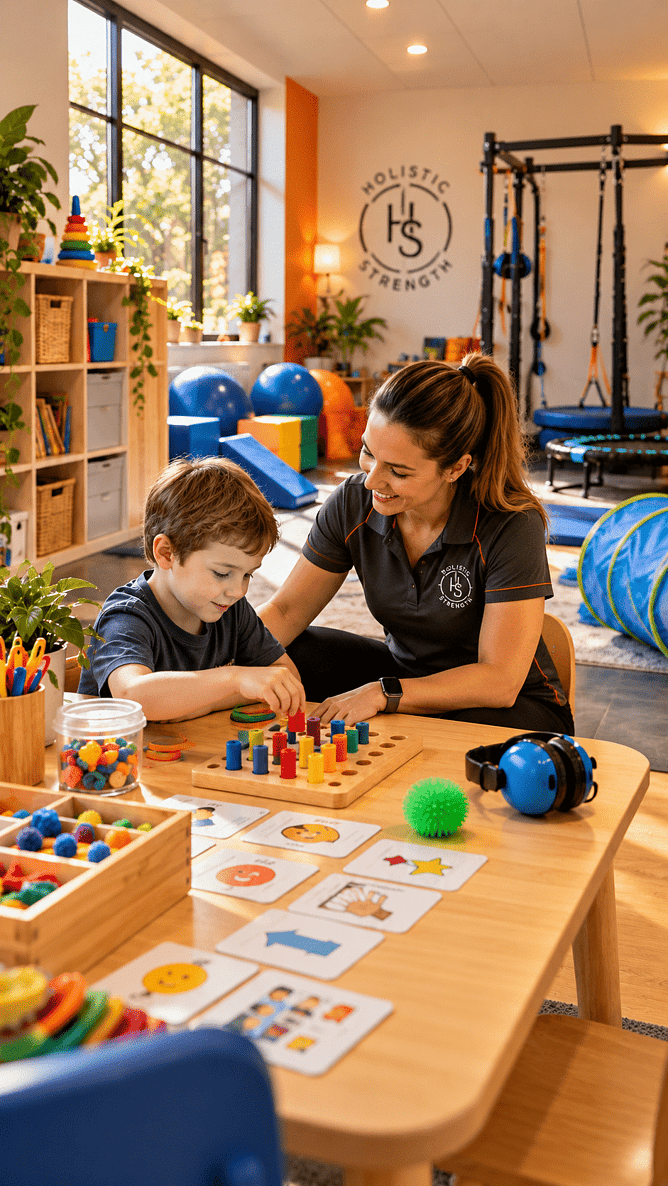
Occupational Therapy can support children with everyday activities that are important to their independence and participation.
This may include skills such as:
Dressing and personal care
Using cutlery and other everyday items
Handwriting and other school tasks
Fine motor activities
Following routines
Participating in play
Developing independence at home and in the community
An Occupational Therapist can work with the child and their family to identify areas where additional strategies, practice or environmental adjustments may be helpful.
Supporting Participation and Connection
Being involved in family life, school, sport and community activities can provide valuable opportunities for children to develop confidence and social connections.
Support does not need to focus solely on developing skills. Creating opportunities for children to participate, make choices, build relationships and enjoy activities that interest them is equally important.
Supporting Each Child's Individual Goals
Supporting a child with Down syndrome is about recognising what makes them unique and creating opportunities for them to participate in everyday life in ways that work for them.
At Holistic Strength, our Occupational Therapists, Physiotherapists, Speech Pathologists and Exercise Physiologists can work alongside children, families and support networks to support individual goals across different areas of everyday life.
With the right support, small everyday activities can become meaningful opportunities for participation, confidence and independence.