Play is more than just a fun part of childhood. It gives children opportunities to explore, connect with others and develop important skills, including communication.
Whether children are playing with family members, friends or independently, everyday play experiences can encourage them to express ideas, share interests and interact with the world around them. For children who need additional communication support, play can also provide a comfortable and enjoyable way to practise new skills at their own pace.
1. Learning Language Through Play
Everyday play creates opportunities for children to hear and use new words. While playing with toys, reading books or exploring activities, children can practise naming objects, asking questions, describing what they are doing and expressing their preferences.
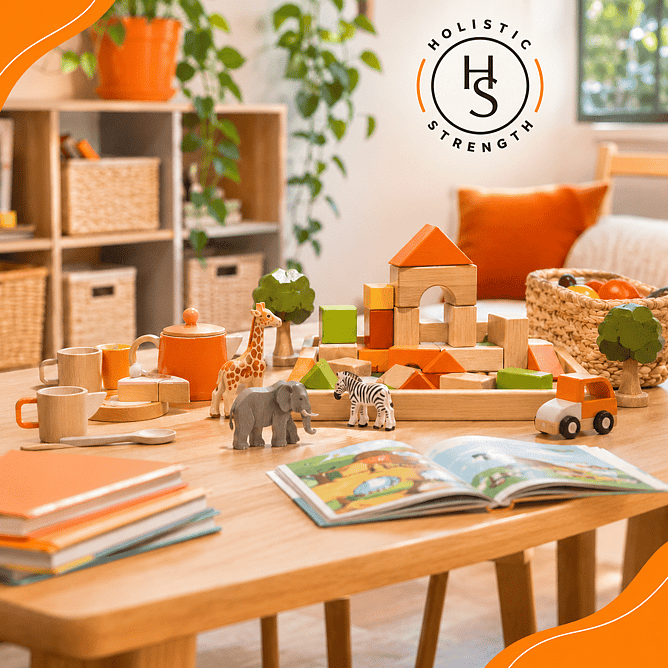
For example, playing with toy animals might introduce words about different animals, sounds, colours and actions. These simple interactions help build vocabulary and create opportunities for back-and-forth communication.
Parents and carers can support this by talking about what the child is doing, responding to their attempts to communicate and allowing time for them to express themselves.
2. Encouraging Imagination Through Pretend Play
Pretend play allows children to explore different situations and experiment with communication in a relaxed setting.
A child pretending to be a shopkeeper, doctor or teacher might practise greetings, asking questions, giving instructions and responding to others. These activities introduce language in a meaningful context while encouraging creativity and confidence.
Children do not need to follow a particular script or play in a specific way. Following their interests and joining in with their ideas can make pretend play more enjoyable and engaging.
3. Developing Social Communication Through Group Play
Playing with others gives children opportunities to practise social communication. Activities such as building with blocks, playing board games or creating something together can encourage turn-taking, sharing ideas and making decisions.
Children may also learn how to express preferences, negotiate, solve small disagreements and respond to other people's ideas.
These experiences can support the development of social connections and friendships. It is important to remember that children develop these skills differently, and some may benefit from additional guidance or support during group activities.
4. Building Listening and Understanding Skills
Communication involves more than speaking. Listening, understanding instructions and recognising different ways people express themselves are also important.
Games such as puzzles, simple treasure hunts and turn-taking activities can provide opportunities to practise listening and following instructions.
Children also learn through observing facial expressions, gestures, body language and changes in tone of voice. These experiences can help them understand how people communicate in different situations.
5. Supporting Emotional Expression and Connection
Play can give children a safe and enjoyable way to explore emotions and connect with others.
Through stories, role-playing and shared activities, children may practise recognising feelings, expressing what they need and responding to others.
For example, playing with dolls or using story characters can create opportunities to talk about happiness, frustration, excitement or sadness.
Children communicate in different ways. Some use spoken words, while others may communicate through gestures, signs, facial expressions or Augmentative and Alternative Communication (AAC) tools. All forms of communication deserve recognition and support.
How Speech Pathology Can Support Communication Through Play
Speech Pathologists can use play-based activities to support children's individual communication goals. Depending on the child's needs, sessions may focus on developing language, understanding instructions, social interaction, speech sounds or alternative ways to communicate.
Families and carers can also learn practical strategies to encourage communication during everyday routines and playtime at home.
At Holistic Strength, our Speech Pathology team works alongside children and their families to support communication in ways that are meaningful to each child.
Making Play Part of Everyday Learning
Children do not need complicated toys or structured activities to benefit from play. Everyday experiences such as reading together, building with blocks, playing pretend or taking turns during a simple game can create valuable opportunities for communication.
The most important thing is to follow the child's interests, make time for interaction and recognise their individual ways of expressing themselves.
After all, play is not just about having fun. It is also an opportunity for children to connect, communicate and learn.