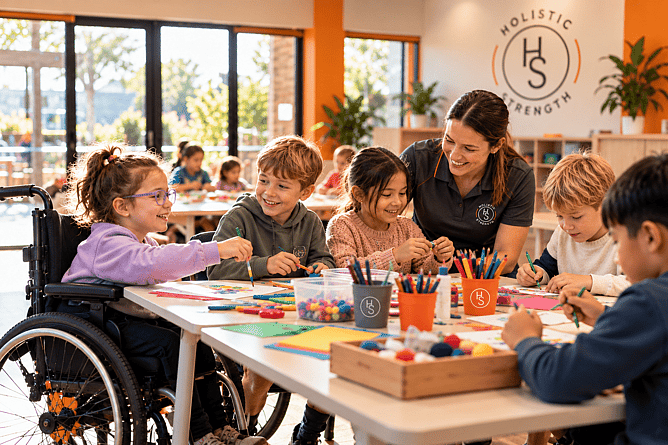
Every child deserves opportunities to learn, play, build friendships and feel included in their community. For children with disability, taking part in community activities can create valuable opportunities to explore interests, develop skills and connect with others.
Whether it's joining a sports group, attending a local event or participating in creative activities, the right environment can help children feel welcome and supported. Families, community organisations and allied health professionals can all play a role in making participation more accessible.
Building Confidence Through Participation
Community activities give children opportunities to try new things, discover their interests and develop relationships outside their usual routines.
Activities such as adapted sports, art classes, playground visits and group games can be adjusted to suit different abilities and support needs. The goal isn't for every child to participate in the same way, but to create opportunities for everyone to be involved.
Having choices and being encouraged to participate at their own pace can help children develop confidence and a sense of belonging.
Supporting Communication and Social Connection
Connecting with other children can provide opportunities to practise communication, develop relationships and explore shared interests.
Some children may benefit from additional support with expressing their needs, understanding social situations or communicating in group environments. Speech Pathologists can work with children and their families to develop strategies that support communication in everyday settings.
Communication can take many forms, including speech, gestures, signs, pictures and communication devices. Making space for different communication styles helps create more inclusive environments where children can express themselves.
Encouraging Independence Through Everyday Experiences
Participating in community activities can also help children practise skills they use in everyday life.
For example, visiting a library, joining a group activity or attending a sporting session may provide opportunities to practise following routines, managing belongings, interacting with others or navigating a new environment.
Occupational Therapists can help identify practical strategies and environmental adjustments that support a child's participation. Depending on the child's goals, this may include adapting activities, developing everyday skills or exploring assistive equipment.
Supporting Families and Carers
Families and carers often play an important role in helping children access community activities. Finding suitable programs, understanding accessibility requirements and coordinating support can sometimes take time.
Connecting with other families, local organisations and relevant support networks may help families discover activities that suit their child's interests and needs.
It can also be helpful to speak with a child's allied health team about ways to adapt an activity or make participation more manageable. Small changes, such as allowing extra time, providing visual information or identifying a quiet space, may help some children feel more comfortable.
Creating More Inclusive Communities
Inclusion is not simply about allowing children with disability to attend an activity. It's about creating an environment where they can participate meaningfully, have their preferences respected and feel that they belong.
Community groups can support inclusion by considering accessibility, offering flexible ways to participate and listening to children and families about what works for them.
At Holistic Strength, our allied health practitioners work with children, families and support networks towards individual goals that can support participation in everyday life.
Every child has their own interests, strengths and aspirations. By working together to remove barriers and create opportunities, families and communities can help children participate in the activities and experiences that matter to them.